
Sine Die is Sine Done!

GA Legislative Watch
By Howard Franklin ● April 4, 2026
Smart Brevity™ count: 4 mins…1,050 words
🖼 1. Big Picture: Sine Done (but decisions still left to make)

Chaos and compromise defined the final hours of the 2026 Georgia General Assembly session, but key issues were punted. The legislature successfully passed a significant, immediate income tax cut while leaving the must-pass budget and long-term tax reform unfinished.
What was secured: Governor Kemp is expected to sign legislation that lowers the income tax rate and mandates a high school cell phone ban across the state.
Sine Die Winners (Headed to Governor):
- Income Tax Rate Cut (HB 1001): Lowers the state income tax rate from 5.19% to 4.99%.
- High School Cell Ban (HB 1009): Mandates a “bell-to-bell” ban on personal electronic devices in grades 9-12 statewide.
- Protester Penalties: A bill was approved that sharply increases penalties for blocking streets to a high and aggravated misdemeanor (up to a year in jail and a $5,000 fine).
- Need-Based Aid (SB 556): Passed the House on Sine Die, allocating $325 million toward a new need-based college scholarship program.
- DA Pay Standardized: Lawmakers passed a bill to standardize pay for district attorneys, shifting the bulk of the salary to the state and capping local subsidies.
Behind the Scenes: The final day was dominated by Republican-led maneuvers to pass controversial policies, including a non-partisan elections bill targeting Democratic-heavy metro Atlanta counties, which will face legal challenges and calls for a gubernatorial veto.
The hang-ups:
- Budget (HB 974): The FY 2027 Budget remains unsettled, heading to a Conference Committee after major disagreements persisted on funding for literacy coaches and social services.
- Tax Reform: The larger tax showdown—pitting the Senate’s aggressive call for deep Income Tax Reductions (SB 477) against the House’s push for Property Tax Relief (HB 1116)—was not resolved by the deadline.
- Daylight Savings Time – HB 154 did not pass the Senate. It would have petitioned the U.S. Secretary of Transportation to shift Georgia to Atlantic Standard Time.
- Paper Ballots – SB 214 would’ve called for a new voting system for all 159 counties in Georgia by 2028. Notably, a July 1, 2026 voting deadline remains in place from a 2024 law, SB 189, which mandates that the state no longer use QR codes on its ballots for tabulation.
🏭 2. Big Industry Developments: Tech, Tax, and Taming Energy Costs
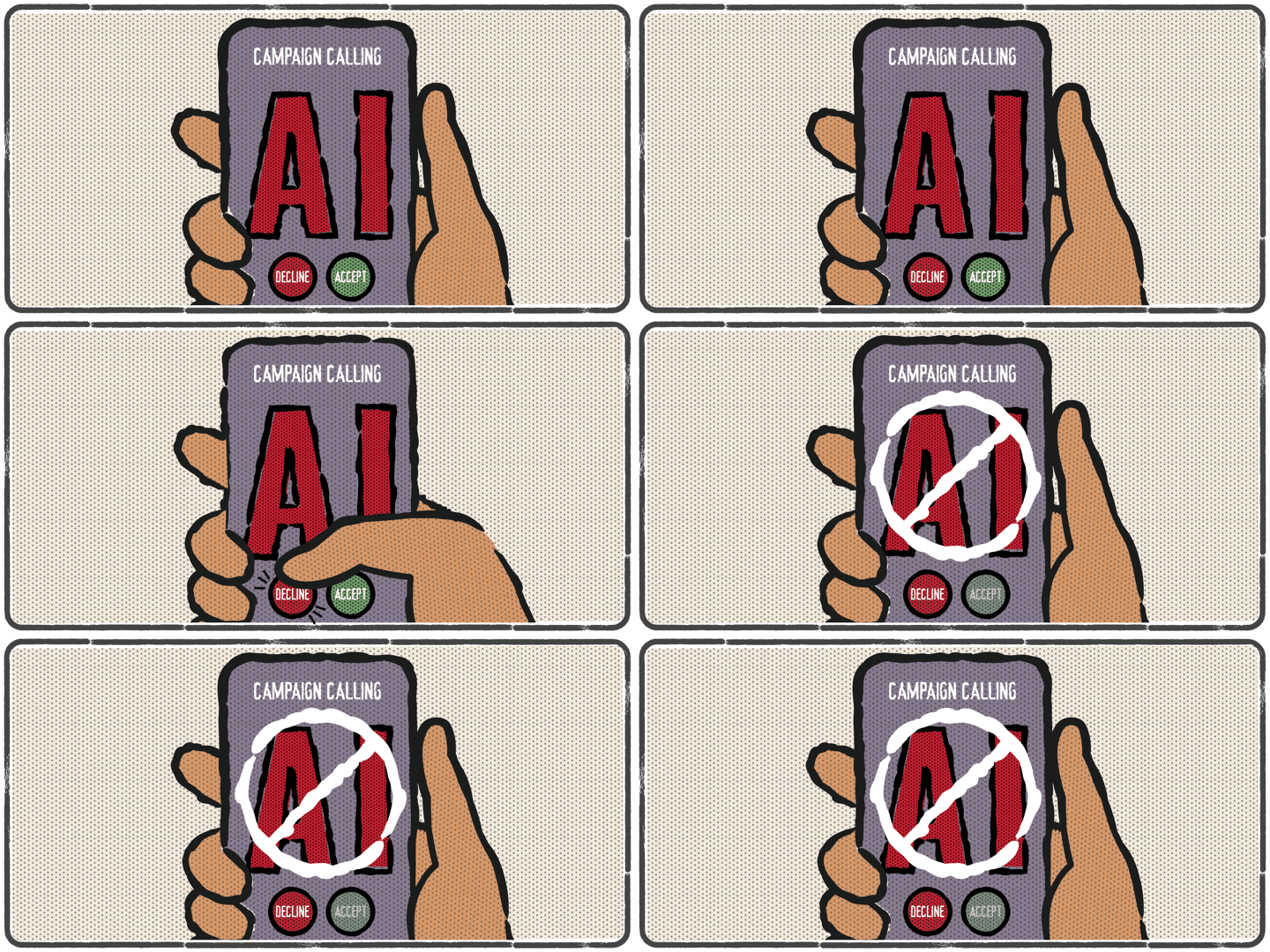
- AI Regulation Passed: Lawmakers approved bills to establish new criminal offenses for AI misuse and mandate disclaimers for AI-generated campaign media (SB 594). Additionally, operators of “AI companion chatbots” must now make clear disclosures that users are interacting with an AI, not a person (SB 540).
- Psychedelics Pre-Emption: A new bill (HB 717) was passed to regulate psychedelic drugs for potential medical use, preemptively establishing standards before their use in clinical trials, such as for treating PTSD in veterans.
Tax Policy and Economic Development
- Immediate Tax Cut: HB 1001, which lowers the state income tax rate from 5.19% to 4.99%, passed both chambers.
- Small Business Credit: New language was substituted into HB 169 to create a tax credit for small businesses that offer certain employee benefits, such as individual coverage health reimbursement arrangements.
Healthcare
- CON Requirements Eased: A major substitute in HB 1393 replaced the original language and effectively removes Certificate of Need (CON) requirements for most healthcare facilities, excluding skilled nursing facilities.
🥊 3. High-Stakes, Post-Sine Die Battle
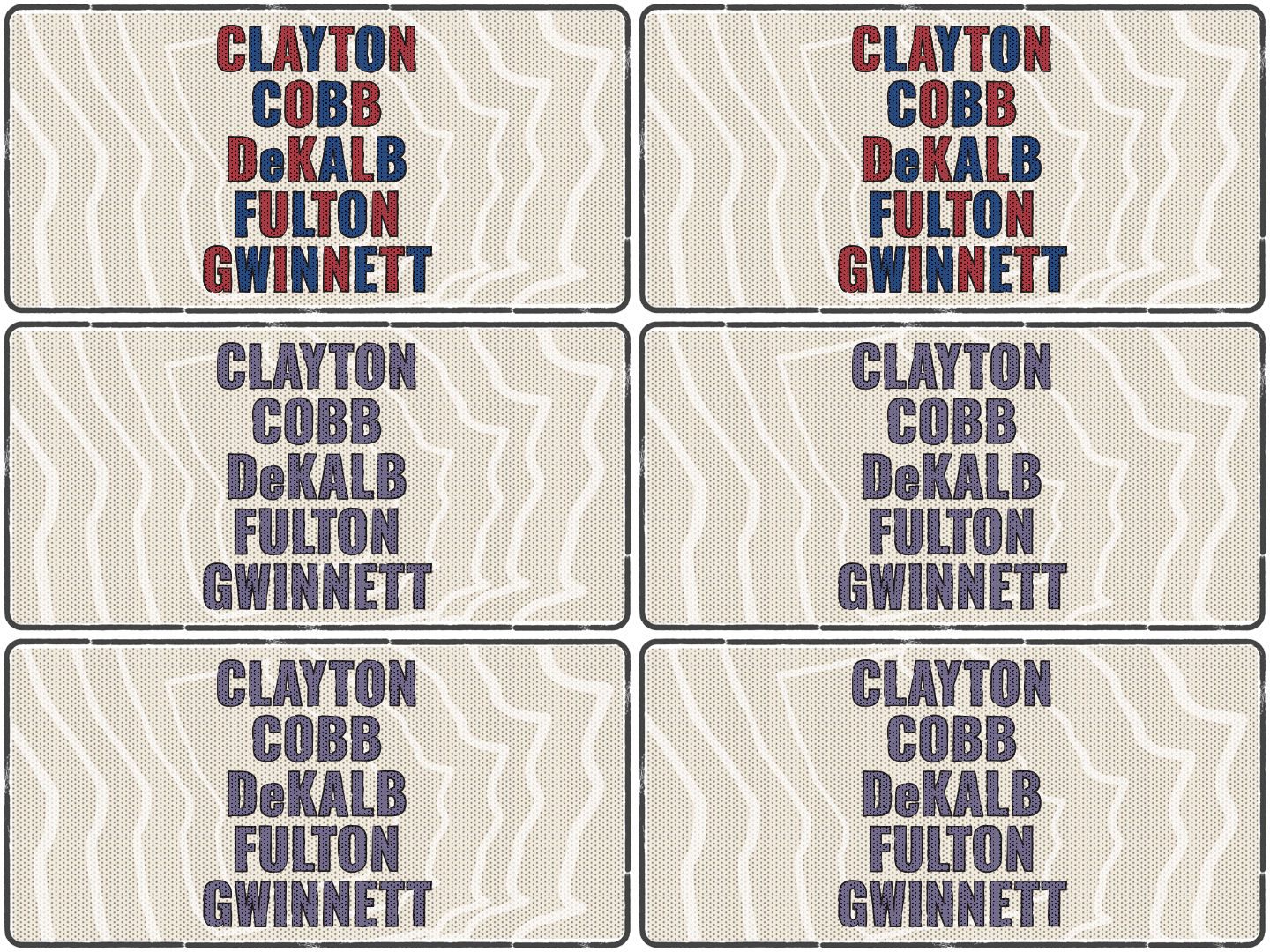
- Non-Partisan Elections (HB 369): The bill, which passed both chambers, requires most county officials, including District Attorneys, in five metro Atlanta counties (Clayton, Cobb, DeKalb, Fulton, Gwinnett) to run in non-partisan elections starting in 2028. Democrats are urging Governor Kemp to veto the bill, citing its partisan intent and constitutional issues.
- Transit Power Grab: A bill was passed that would consolidate the GRTA and ATL into a new authority and move regional transit planning to GDOT. The MARTA one-cent extension was added to this bill, which critics call a power grab by anti-transit conservatives.
♟ 4. Campaigns and Political Chess

- Gubernatorial Fundraising: The GOP gubernatorial primary has seen more than $77 million spent or reserved for TV ads, outpacing $1 million spent by the lone Democrat on broadcast, Jason Esteves. A new allied group for Secretary of State Brad Raffensperger, Hard Working Georgia Families, is adding nearly $500,000 to the mix.
- Congressional Challenge: Democrat Everton Blair is hosting a “No Kings” rally against U.S. Rep. David Scott (GA-13), linking the long-time incumbent to the national protest movement’s rhetoric.
- The runoff between Shawn Harris and Clay Fuller is set for Tuesday, April 7. Whoever wins the special election for the seat vacated by Marjorie Taylor Greene will have to run again in their party primary on May 19 with a possible runoff on June 16.
- Senate Vacancy: State Sen. Freddie Powell Sims (D-Dawson) resigned on March 23 due to her husband’s illness, creating a vacancy in the Senate. Sadly, he passed away a short time later.
📍 5. Local: Atlanta & Regional Governance
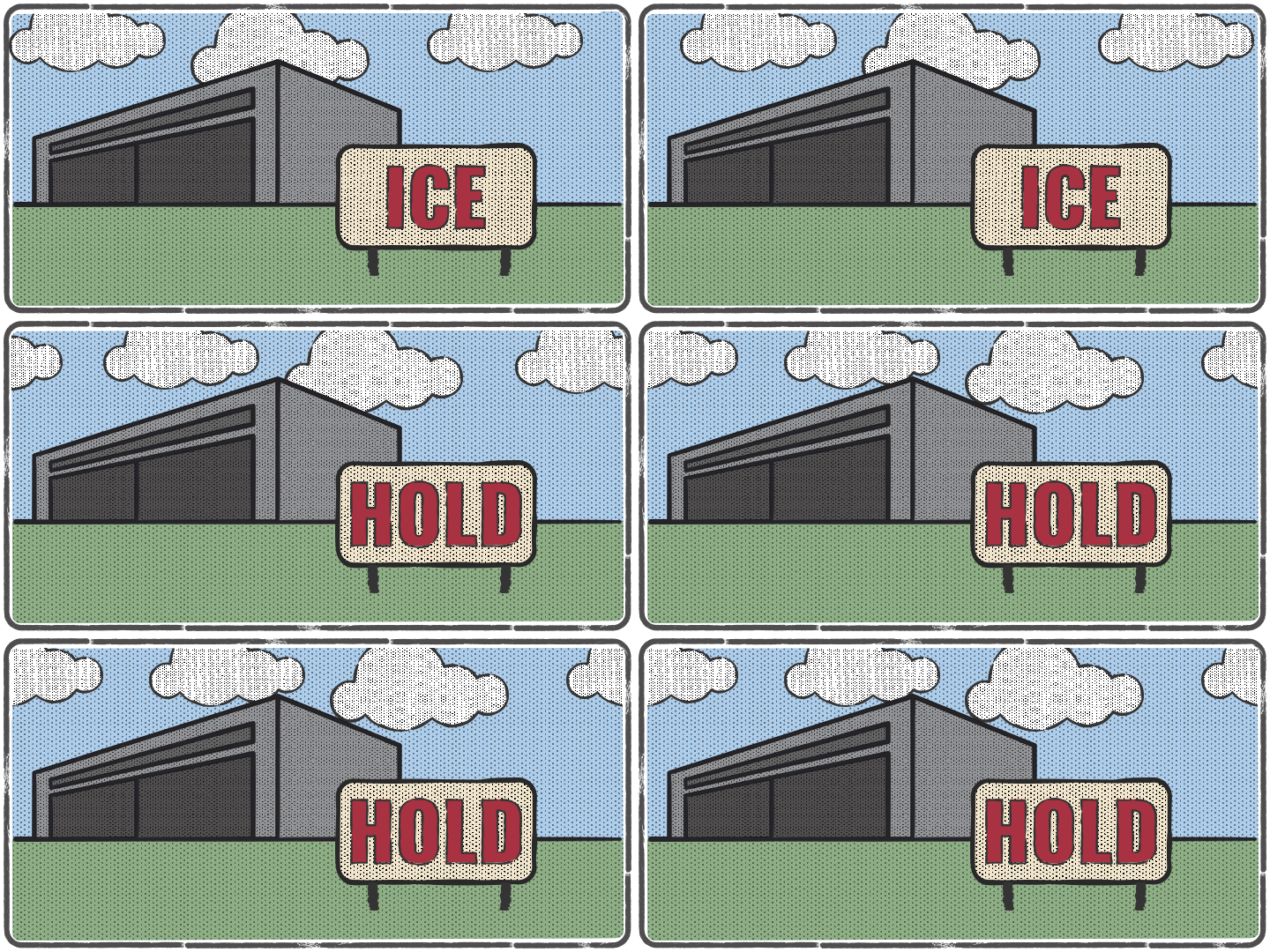
ICE Detention Plans Halted. The Trump administration paused plans to acquire new warehouses for immigrant detention facilities, including the two controversial sites purchased in Social Circle and Oakwood. Local officials that have resisted the plan report they have not yet heard from ICE.
MARTA Wait Time and Fare Fight. Controversial HB 583 would have prohibited the use of Transit SPLOST funds for free or reduced public transit fares and mandated an eight-year waiting period before a failed transit referendum can be put back before voters. Separately, DeKalb CEO Lorraine Cochran-Johnson publicly opposed passing the MARTA one-cent sales tax extension until she can negotiate project details for DeKalb.
AI Misuse in Court. Clayton County District Attorney Tasha Mosley apologized to the Georgia Supreme Court after an assistant prosecutor admitted to using AI to draft legal briefs that cited non-existent cases. The assistant DA faced immediate “strict disciplinary action.”
The Week Ahead

Budget negotiations: The immediate legislative focus shifts entirely to the Conference Committee, where negotiators must reconcile the House and Senate versions of the FY 2027 Budget (HB 974) to avoid a government funding crisis.
The Bottom Line: With Sine Die complete, the political focus turns to Governor Kemp, who now holds the fate of dozens of major bills, including those mandating non-partisan elections in metro Atlanta and regulating AI in political campaigns.

In parliamentary procedure, a ‘friendly amendment’ enhances the original motion, often as a clarification of intent. Our amendment is a newsletter delivering intelligence from the team at Ohio River South on southern politics, policy making and public sector business.
Was this forwarded to you? Sign up here to get GA Legislative Watch sent to your inbox each week.